Project Showcase · Field Learning
Gunite & Shotcrete Field Learning
AET 101 Building Systems Materials · Midlands Technical College
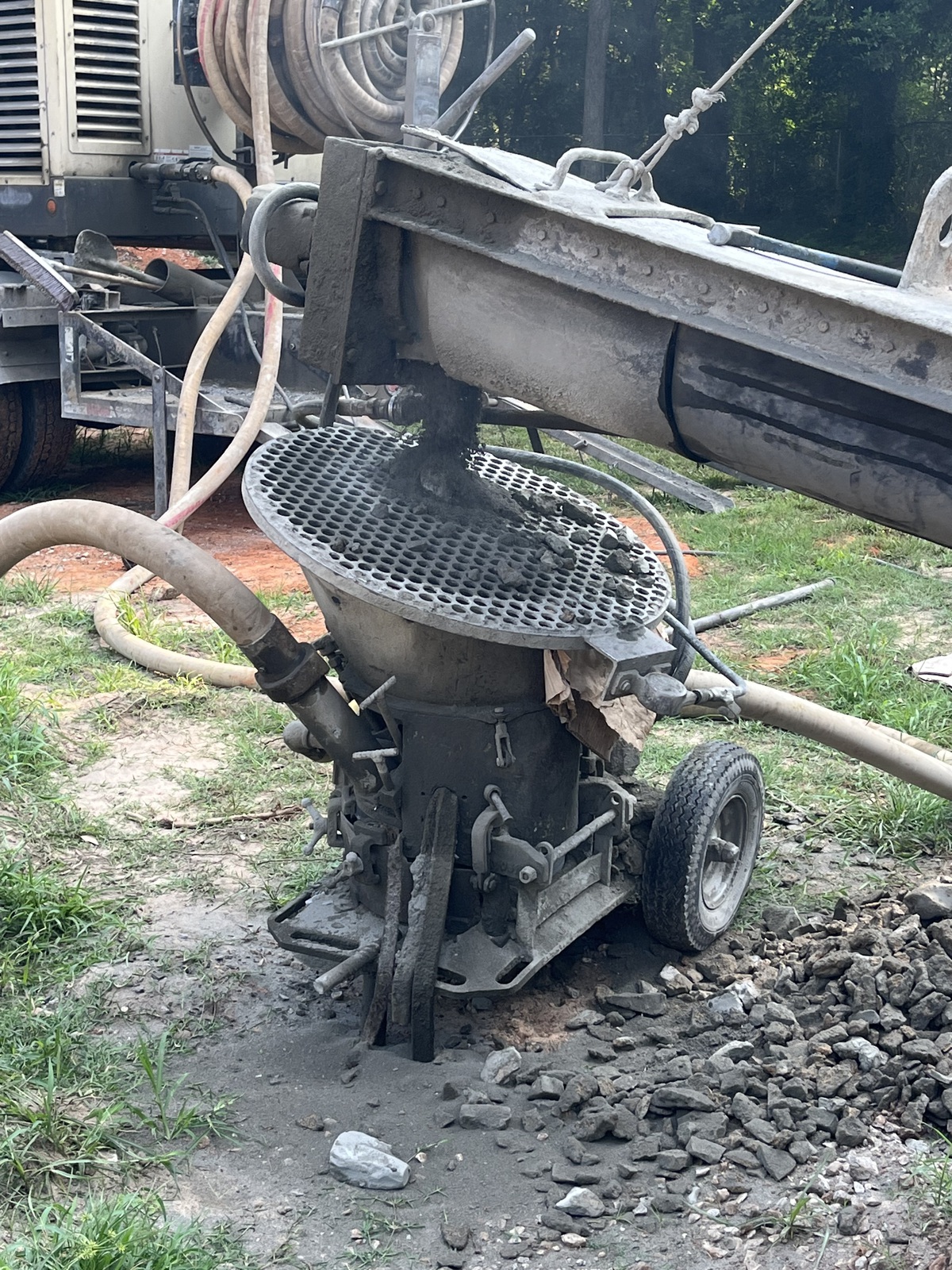
A coursework-based field learning project connecting classroom research with real pool construction observation. This project focused on gunite and shotcrete application methods, pool shell construction, equipment, crew roles, curing, and field documentation.
Quick Facts
Type
Education project / field learning
Course
AET 101 Building Systems Materials
Focus
Gunite, shotcrete, pool shell construction, equipment, crew roles, curing
Connection
Residential pool construction and real jobsite observation
My role
Researched the material systems, observed field application, documented equipment and crew roles, and connected classroom learning to real construction conditions.
What I Studied
- •Difference between dry-mix gunite and wet-mix shotcrete
- •How material is moved from truck to hopper, through the hose, and applied at the nozzle
- •The role of water at the nozzle during gunite application
- •How crew coordination affects quality, timing, and consistency
- •Common site issues such as rebound, clogs, overspray, and curing concerns
- •Why curing and moisture maintenance matter after application
Field Learning Takeaways
- •Gunite allows crews to start and stop application more easily than wet-mix shotcrete.
- •Shotcrete arrives premixed and can move faster, but timing and hose management are more critical.
- •The nozzleman plays a major role in quality control during application.
- •The hopper attendant, machine operator, helpers, and supervisor all support a smooth workflow.
- •Both materials require proper curing, with the concrete shell reaching its full cure over about 28 days.
Why It Matters
This project helped me understand how material selection, equipment setup, crew communication, and field conditions all affect the construction of a concrete pool shell. It also gave me a stronger technical foundation for understanding pool construction beyond scheduling and documentation.